
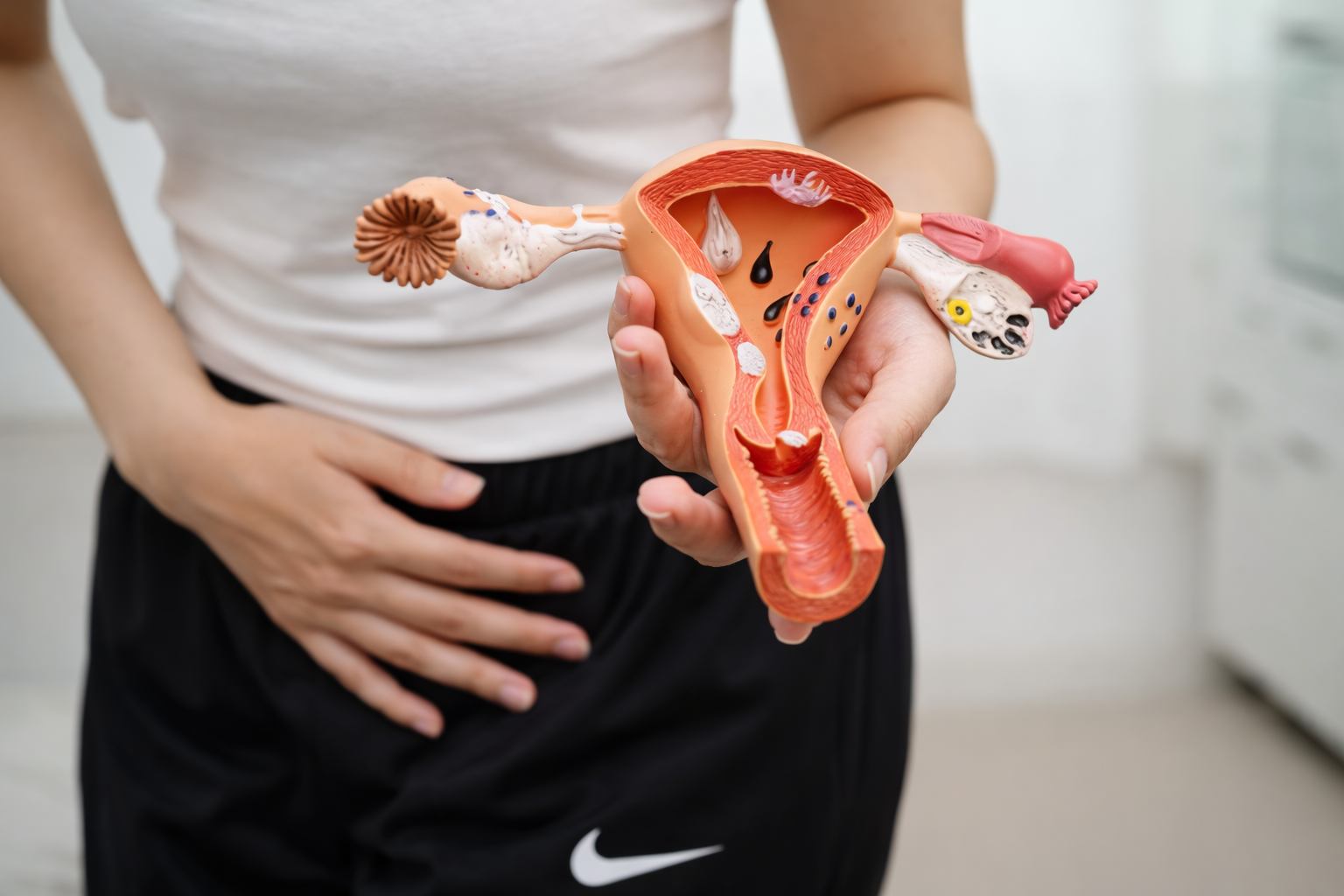
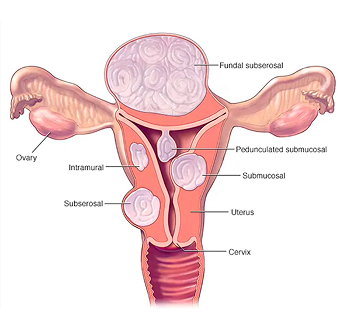
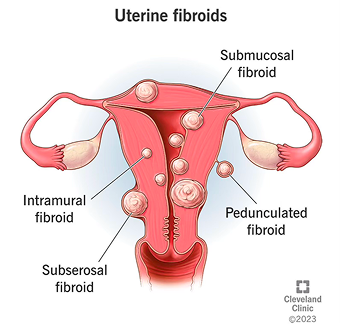
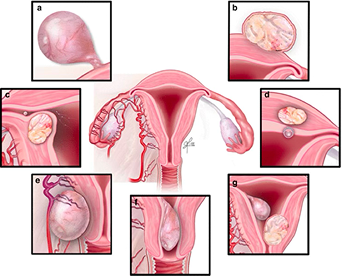
Myoma, or uterine fibroids is a benign condition in which smooth muscle grow either inside or outside the uterus. Uterine myomas consist of muscle and fibrous tissue. Uterine myomas are classified as benign tumors, with vary race chance of become cancer. The size of these benign tumors can vary, ranging from as small as a marble to as large as a tennis ball, or even bigger as term pregnancy.
MYOMA
Myoma, or uterine fibroids is a benign condition in which smooth muscle grow either inside or outside the uterus. Uterine myomas consist of muscle and fibrous tissue. Uterine myomas are classified as benign tumors, with vary race chance of become cancer. The size of these benign tumors can vary, ranging from as small as a marble to as large as a tennis ball, or even bigger as term pregnancy.
Causes of Uterine Myomas
The exact cause of uterine myomas remains unknown to this day. However, several factors are believed to increase a person's risk of developing fibroids, including : A family history of uterine myomas, having the first menstrual cycle at a young age, specifically under the age of 12, obesity or being overweight, reproductive hormone imbalances, particularly involving estrogen and progesterone. Unfortunately, any women may be unaware of this condition, as uterine myomas often do not cause specific symptoms. In fact, most cases are discovered incidentally during an ultrasound (USG).
Symptoms of Uterine Myomas
Uterine myomas often do not trigger specific symptoms, making it difficult for individuals to recognize the condition. Regardless, some common uterine fibroid symptoms include : Menstrual pain, heavy menses, prolonged menses, pelvic pain, abdominal bloating or a feeling of fullness, frequent urination, which may occur if the myoma presses against the bladder, constipation, which may occur if the myoma presses against the large intestine.
How to diagnose uterine myomas?
Several diagnostic procedures can be performed by a doctor to confirm the presence of uterine myomas, including patients' complaints and a family history, physical examination, ultrasound (USG), Magnetic Resonance Imaging (MRI), hysteroscopy. A procedure where a thin, flexible tube equipped with a camera is inserted through the vagina to examine the inside of the uterus.
Treatments for Uterine Myomas
Several diagnostic procedures can be performed by a doctor to confirm the presence of uterine myomas, including : patient's symptoms and family history, physical examination, ultrasound (USG), Magnetic Resonance Imaging (MRI), hysteroscopy. A procedure where a thin, flexible tube equipped with a camera is inserted through the vagina to examine the inside of the uterus.
Surgery for myoma
The option for surgery must be discussed properly, to know what is the patient need and choices of surgery. The choice as follows :
- Myomectomy, a surgical procedure to remove uterine myomas is usually recommended for patients with large myomas or for younger women who are planning to get pregnant.
- Hysterectomy, a surgical procedure to remove the uterus. This is generally performed on patients who are no longer in their reproductive years and are experiencing symptoms that interfere with daily activities.
- Robotic surgery, a minimally invasive technique that uses the robotic system to treat complex cases in a difficult-to-reach area.
